

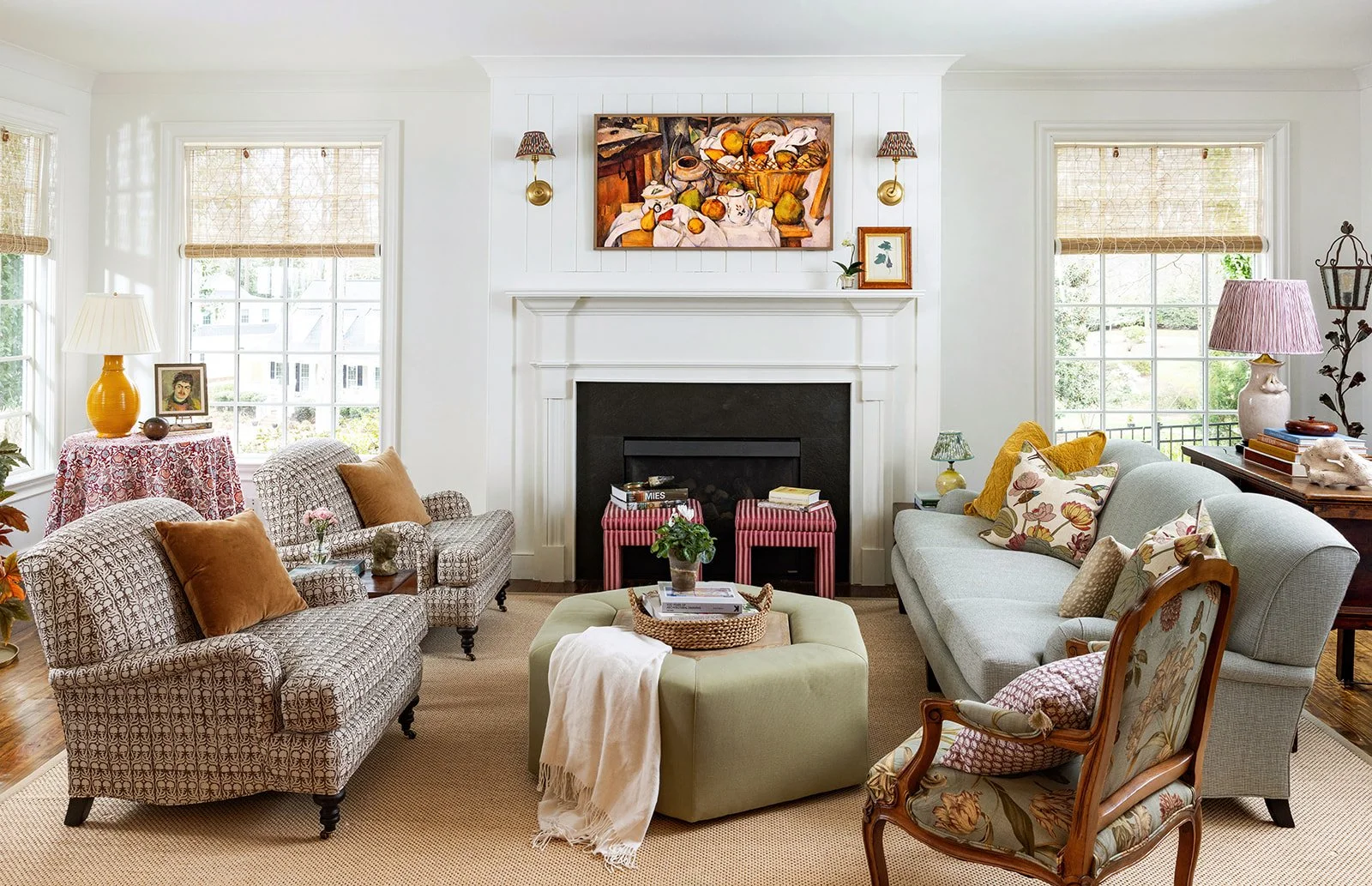
Blenheim
Phased Interior and Exterior Renovation
Raleigh, NC
This project takes me back to my childhood, spending summers at my grandmother’s house in Connecticut. My sister and I would walk along the stacked stone walls that marked the street edges and property lines, making our way to our cousins’ house where we would spend days swimming in the Long Island Sound. Many of the homes were 100 years old, separated by acres of horse pastures, and built with real materials like hand-formed brick, cedar siding and shingled roofs. The house on Blenheim looks and feels like it was transported straight from Fairfield County, with those good bones and that feeling of “home”.
Project Focus
Long-term phased renovation planning
Improved circulation and everyday use
Additions integrated with respect for existing architecture
Design decisions made with future flexibility in mind
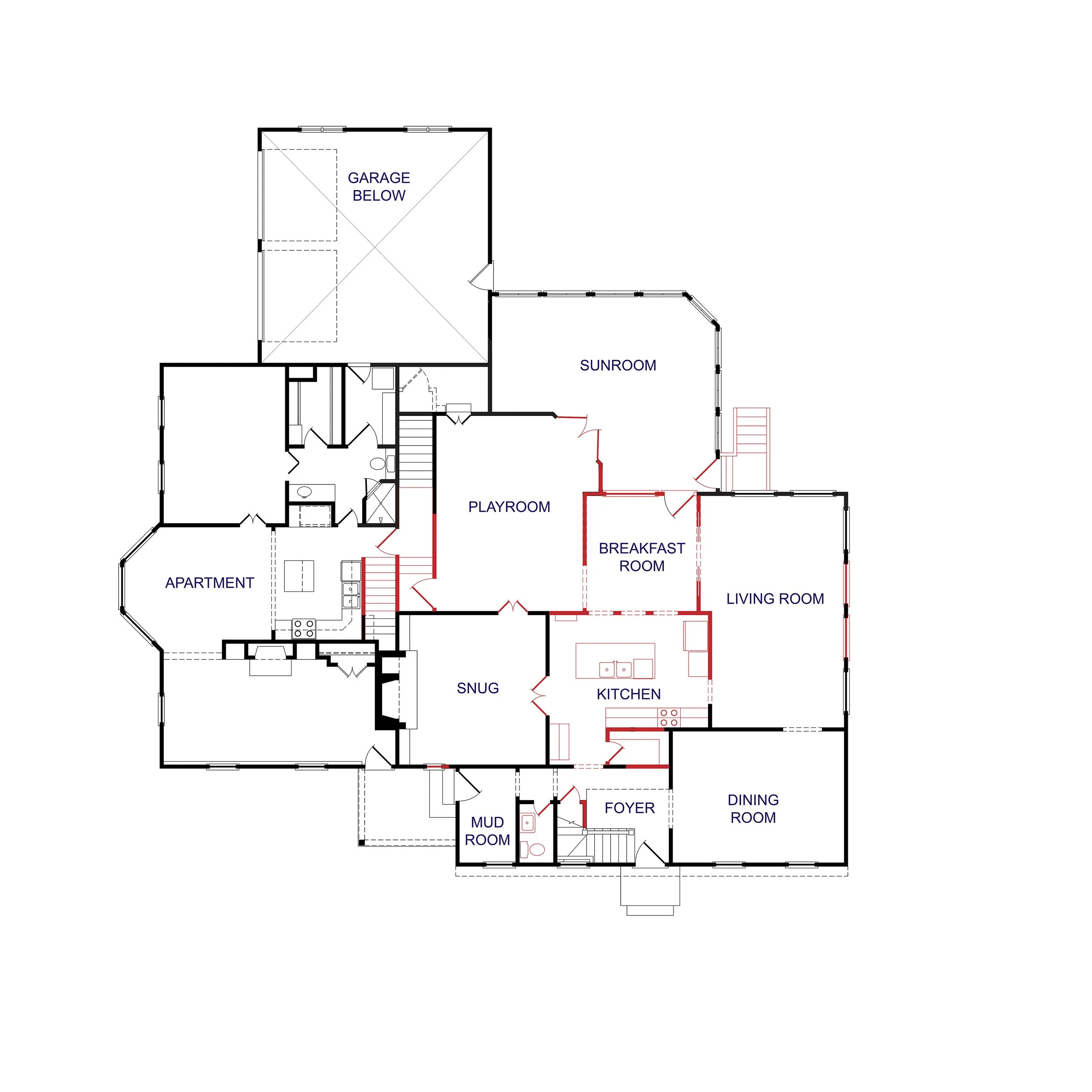
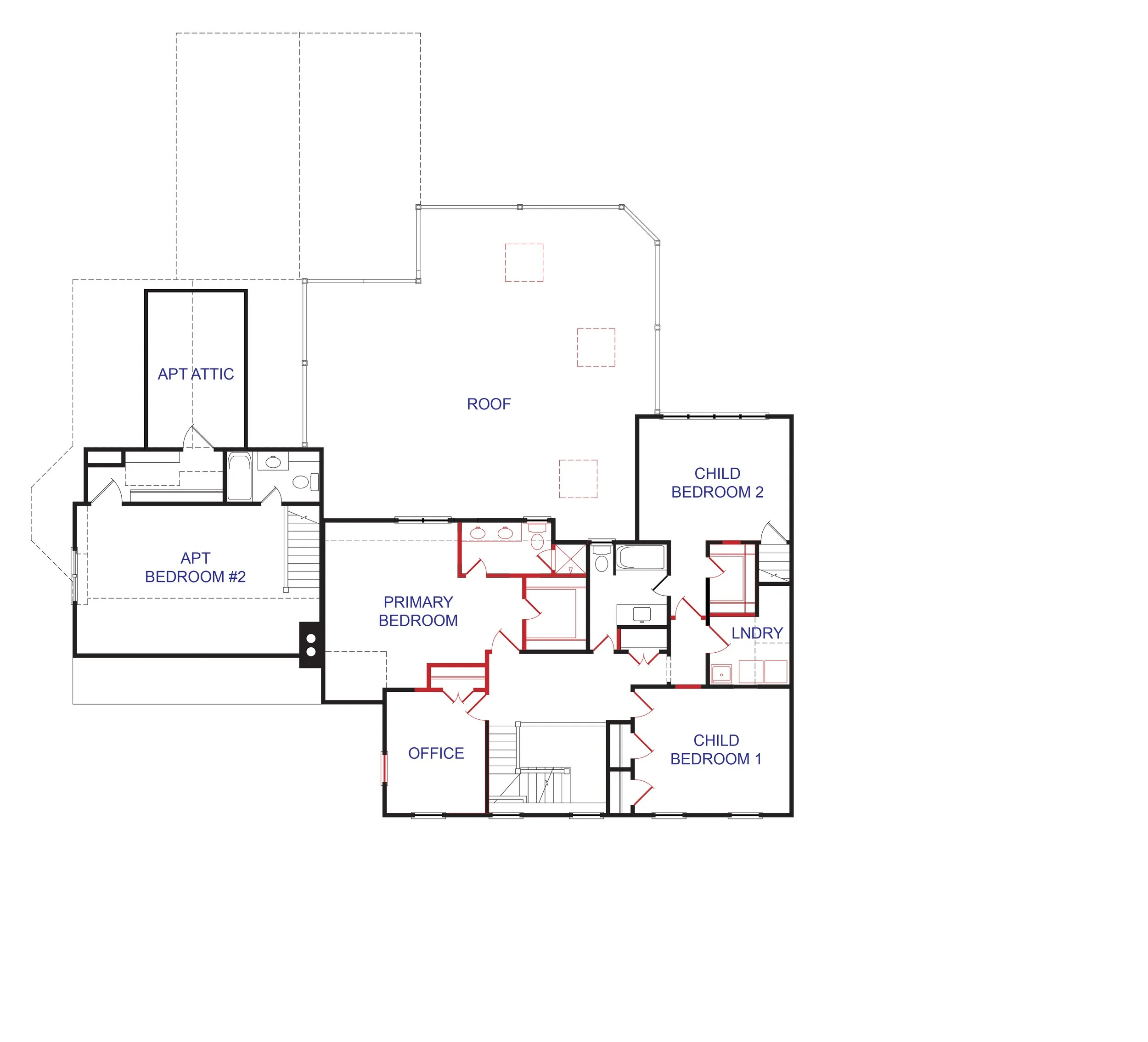
Originally built in 1976, this home underwent several additions over the span of two decades, resulting in over 5,000 sq. ft of livable space. However, it had become a sprawling series of mismatched floor heights, rooms, and rooflines.
Goal: The goal was to simplify the complexities of the previous additions, refine the existing floor plan, and replace outdated renovations with elements that would restore the defining characteristics of a classic New England Colonial home.
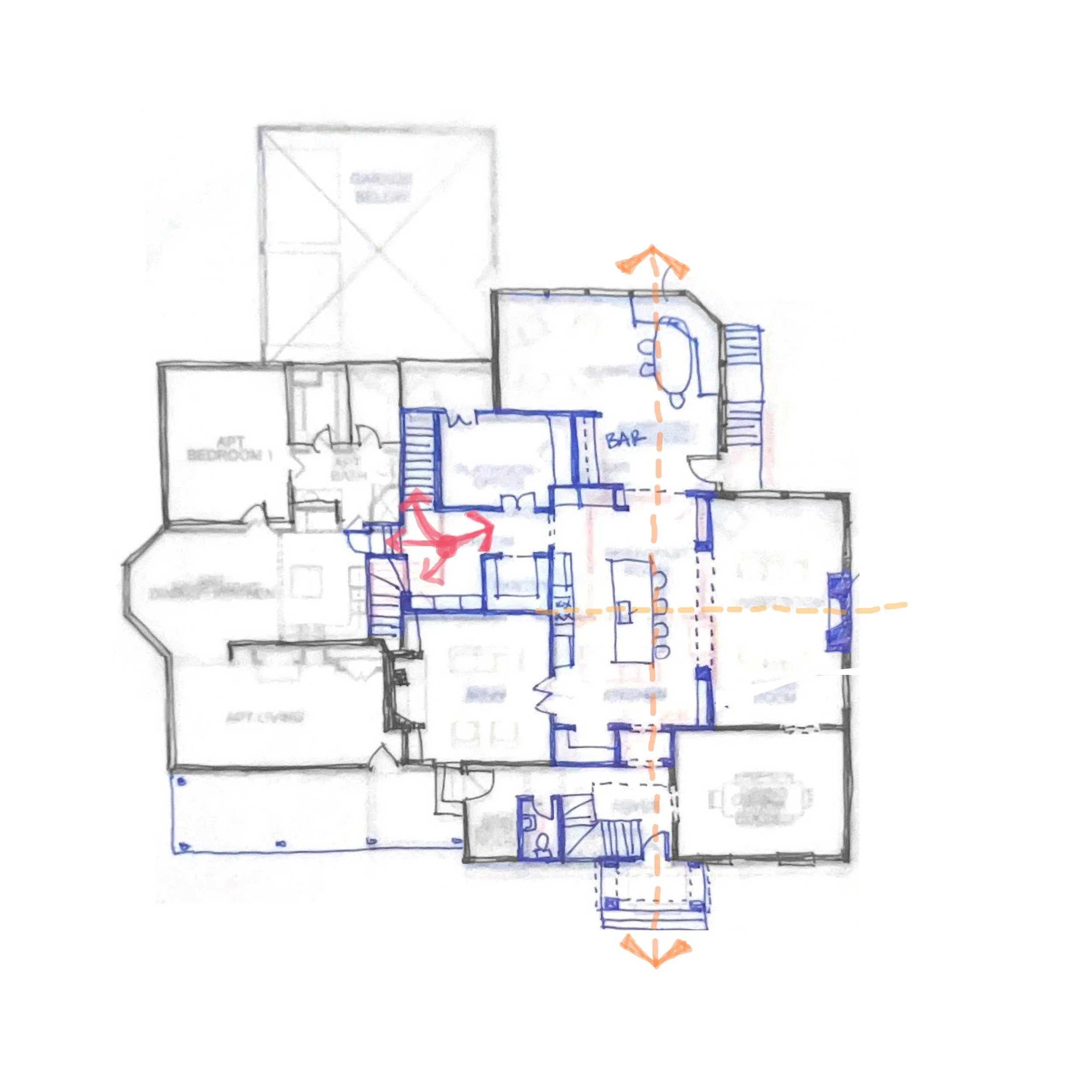
Approach: The clients wanted a long-term renovation plan that would allow their home to evolve thoughtfully over time without losing coherence or character. Rather than approaching the work as a single overhaul, the project was organized into deliberate phases that could be undertaken as needs and priorities shifted.
Initial work clarified circulation and improved daily function, addressing inefficiencies in the existing layout. Each phase was planned with attention to proportion and connection so new spaces felt cohesive with the original home. Decisions were evaluated not just for immediate benefit, but for how they would support future phases and long-term livability.
By pacing the work in phases and coordinating each step carefully, the home now supports present needs while retaining flexibility and harmony for years to come.
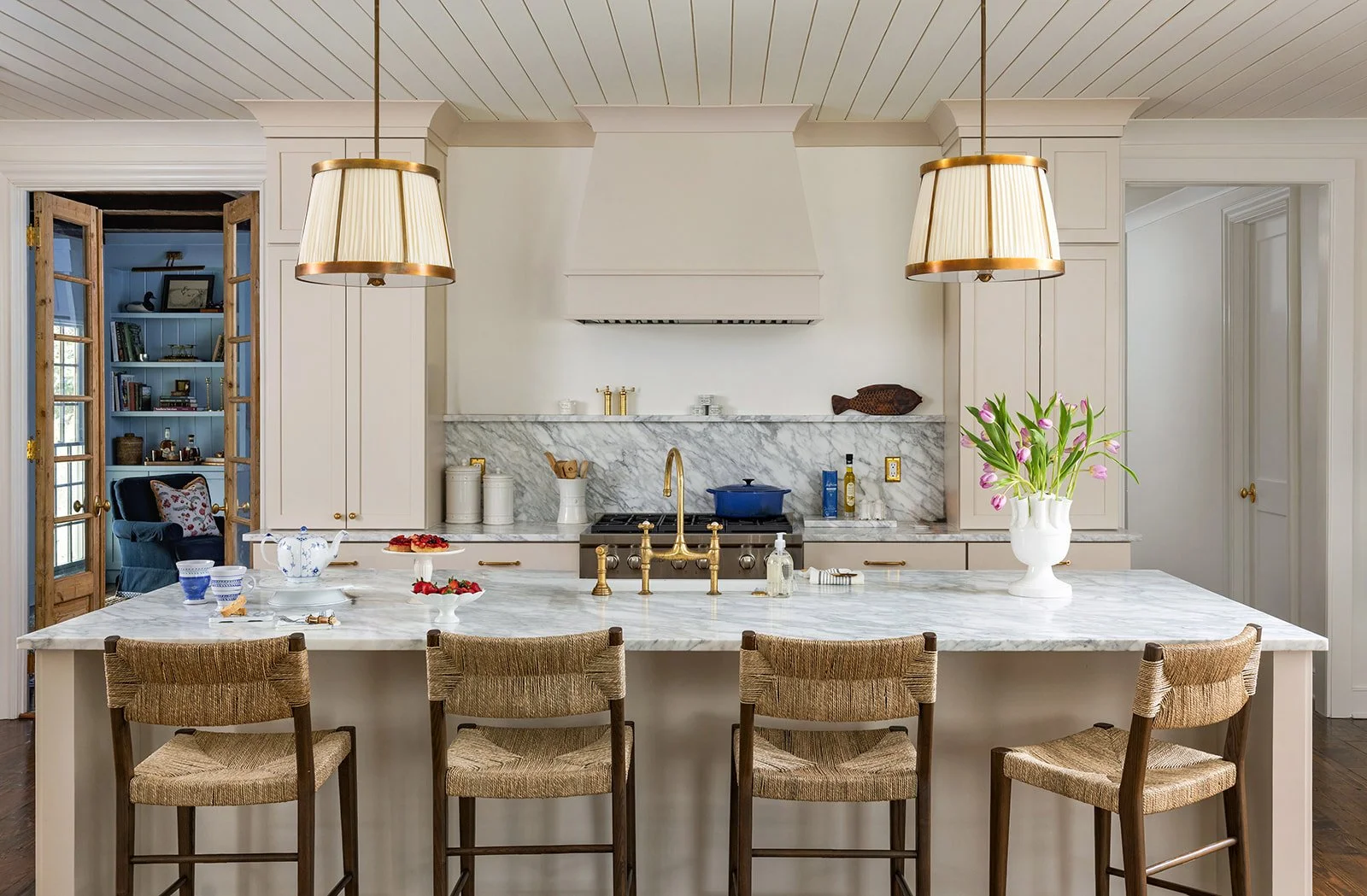
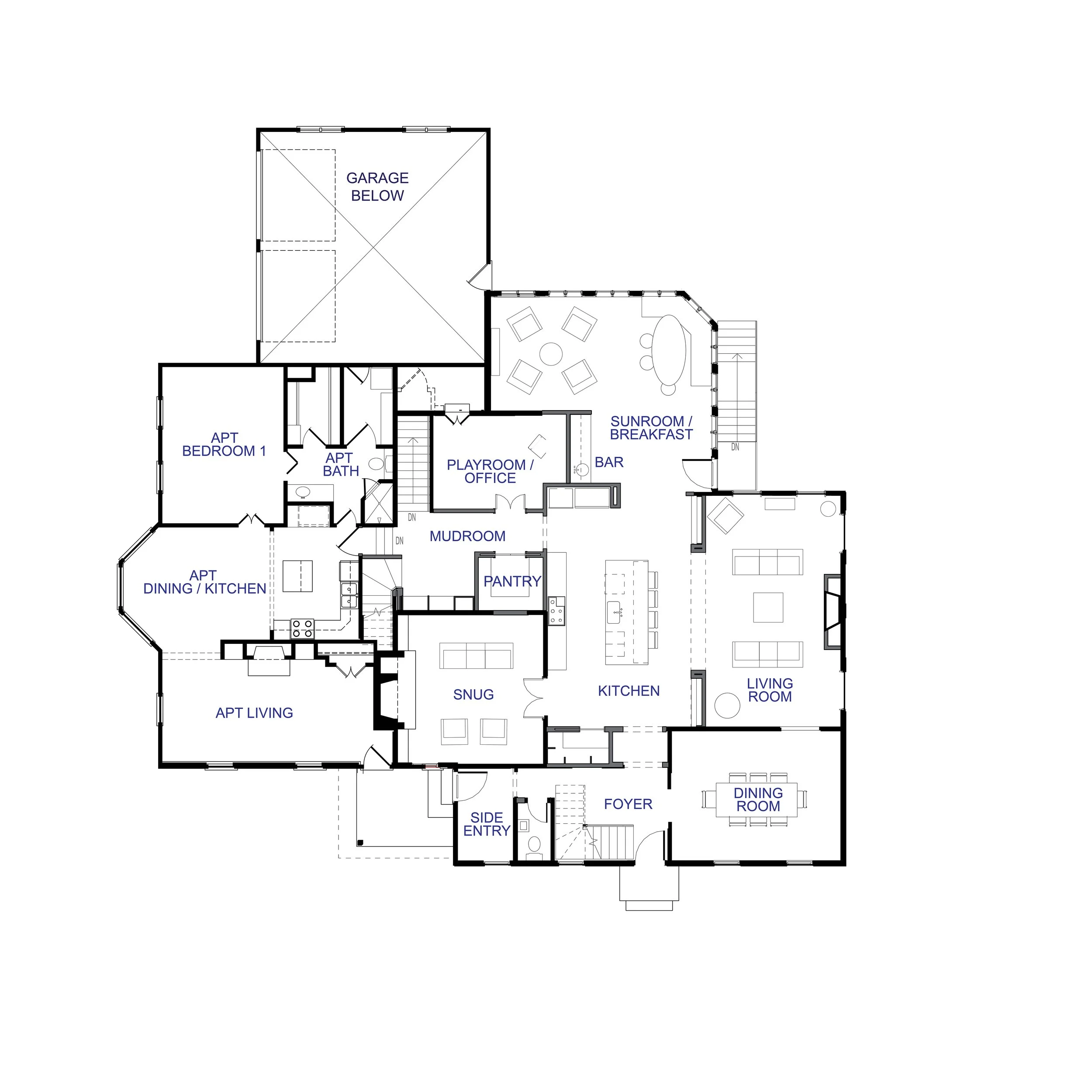
A kitchen of this size requires a lot of cabinets. Keeping them simple and using a stock cabinetry color allowed us to put more money towards the lighting and plumbing fixtures, the things that add character to a space.
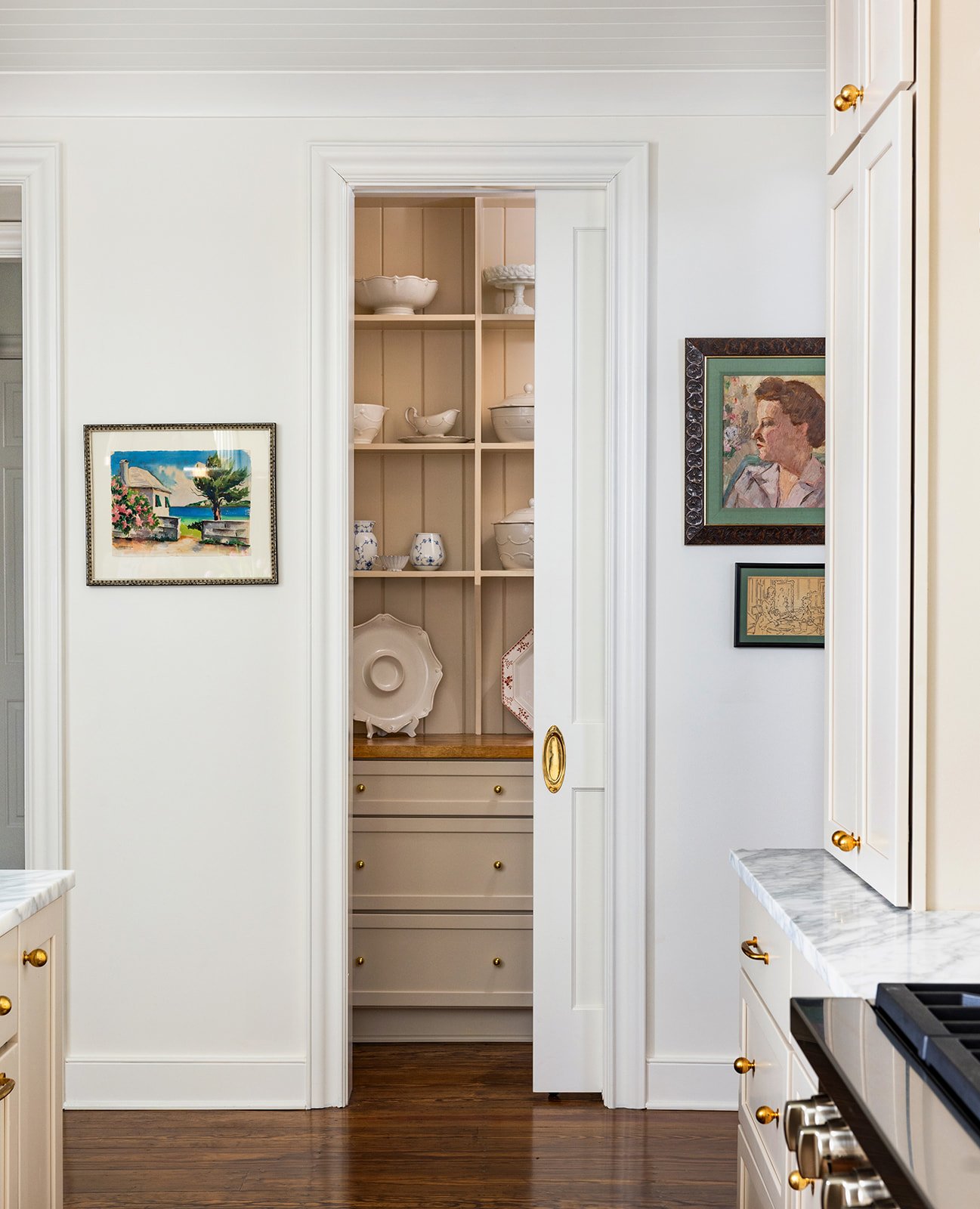
We made use of an awkward pocket of space by creating a larder cupboard, to display china and serve coffee.
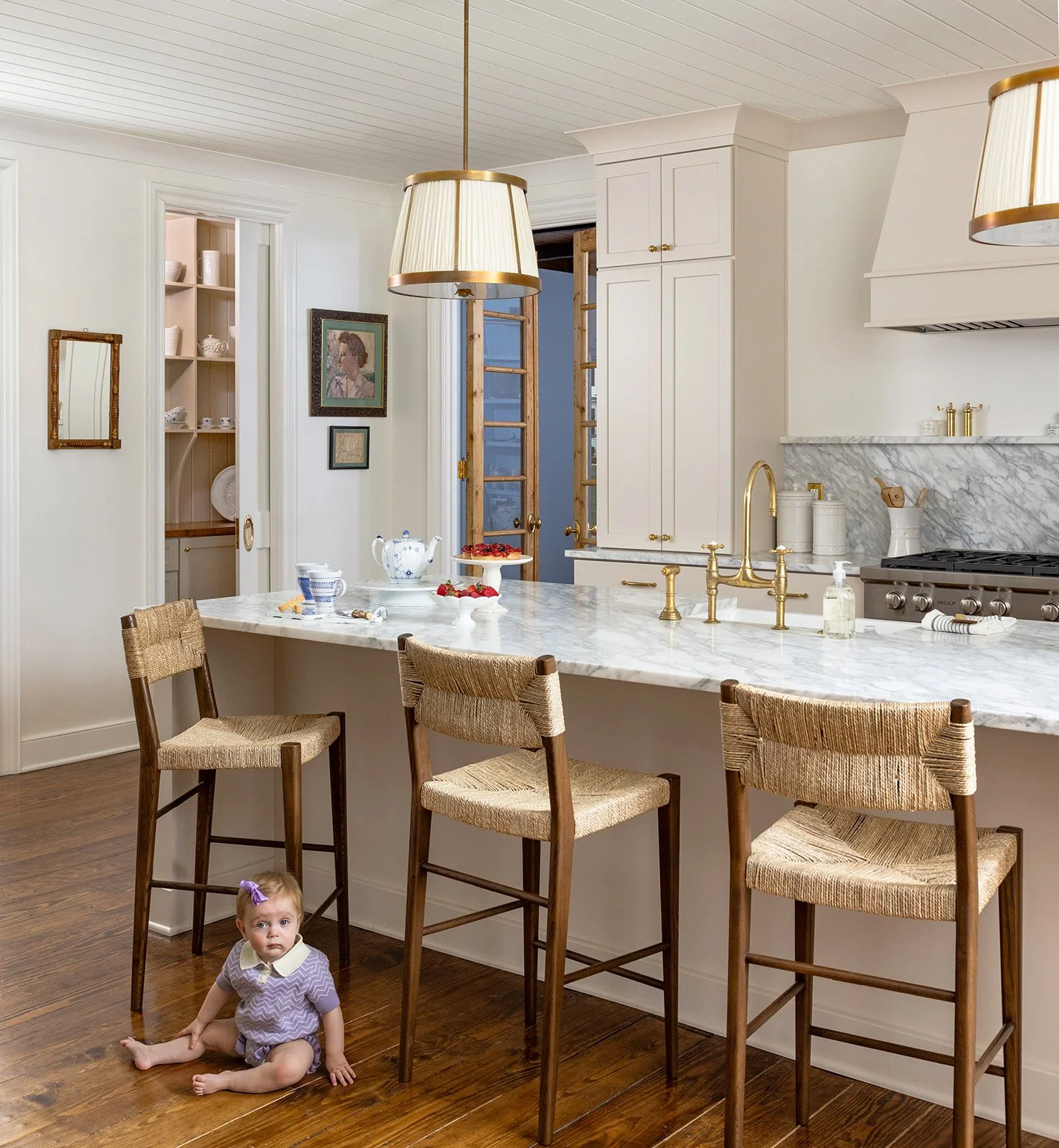
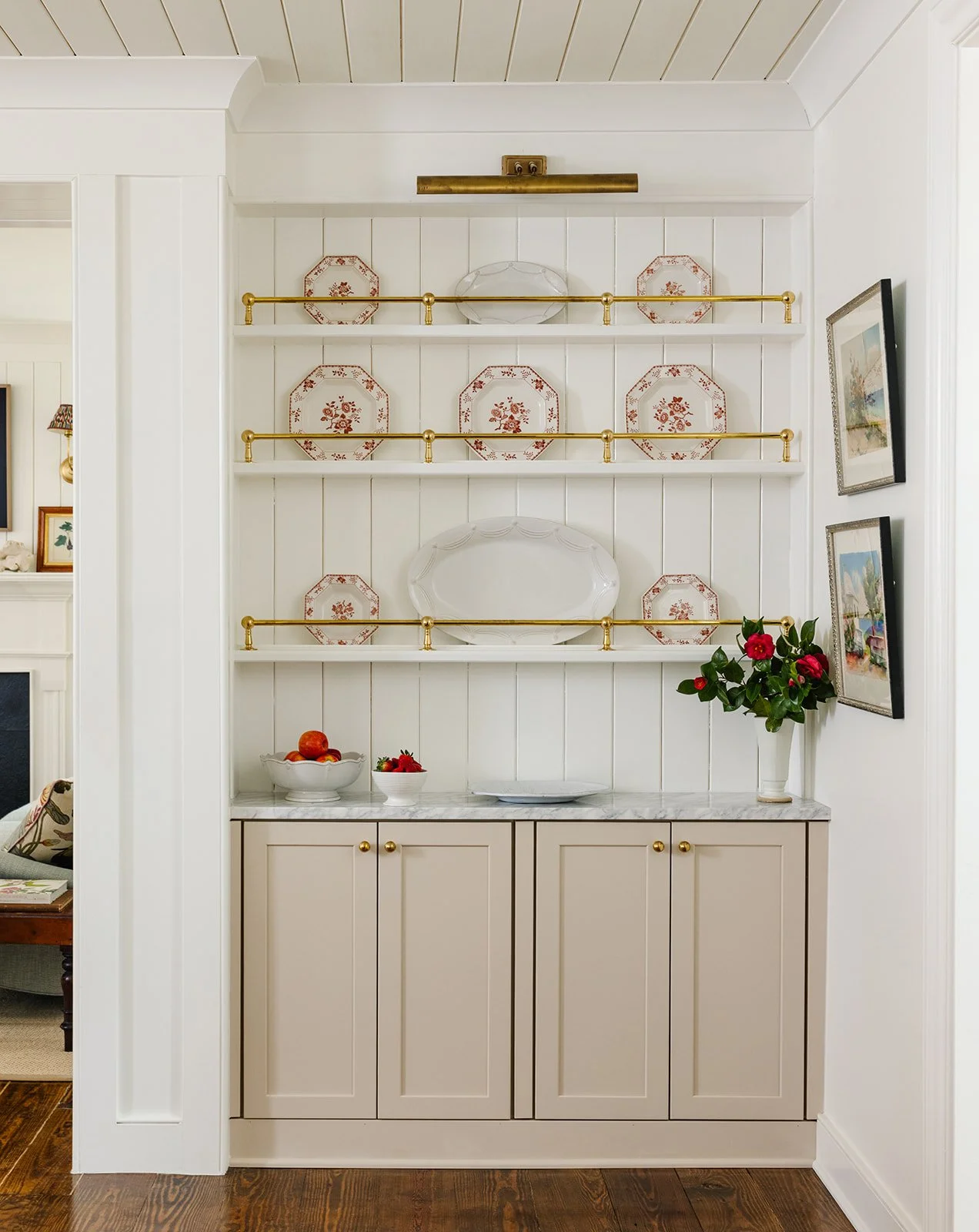
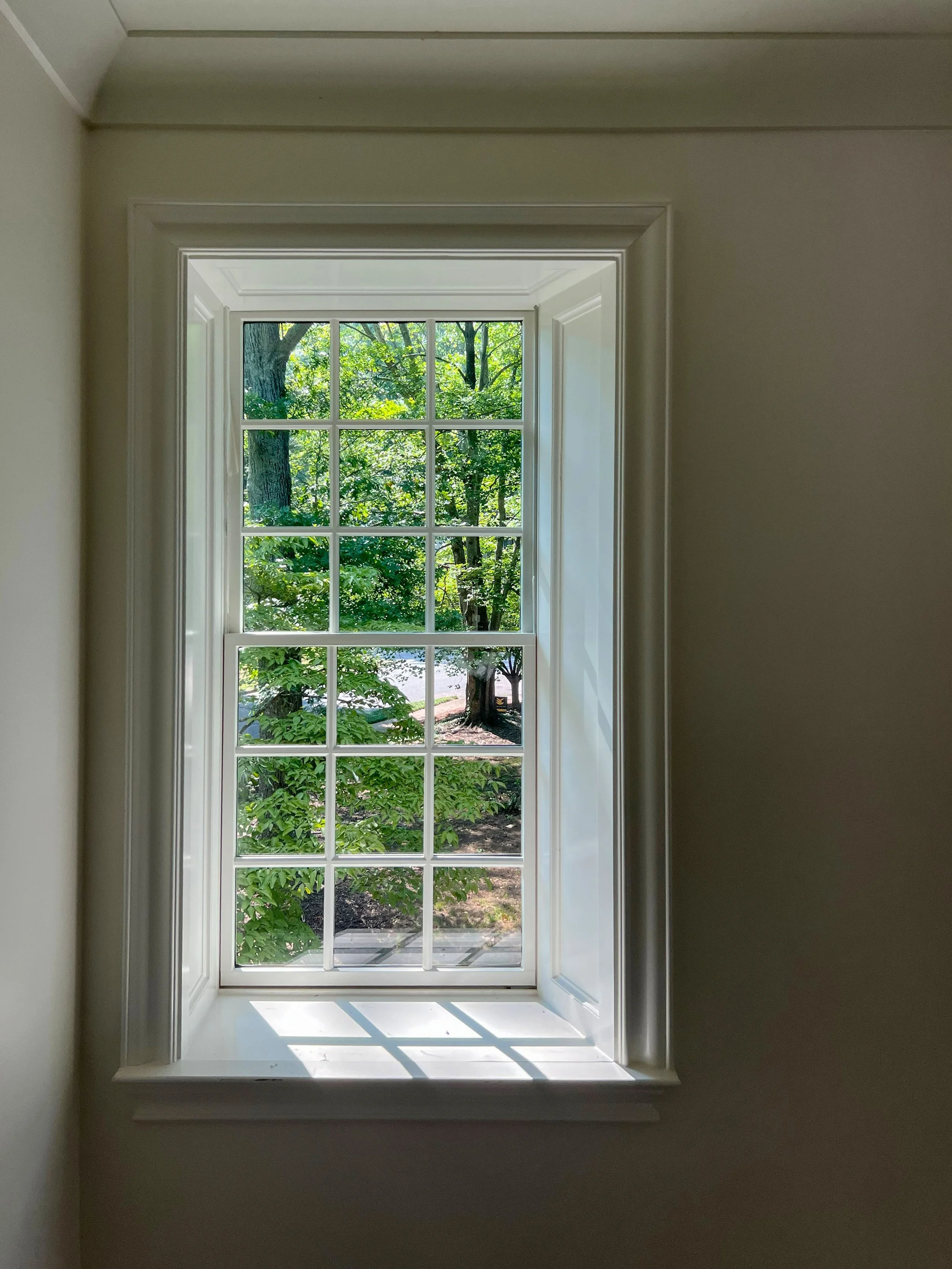
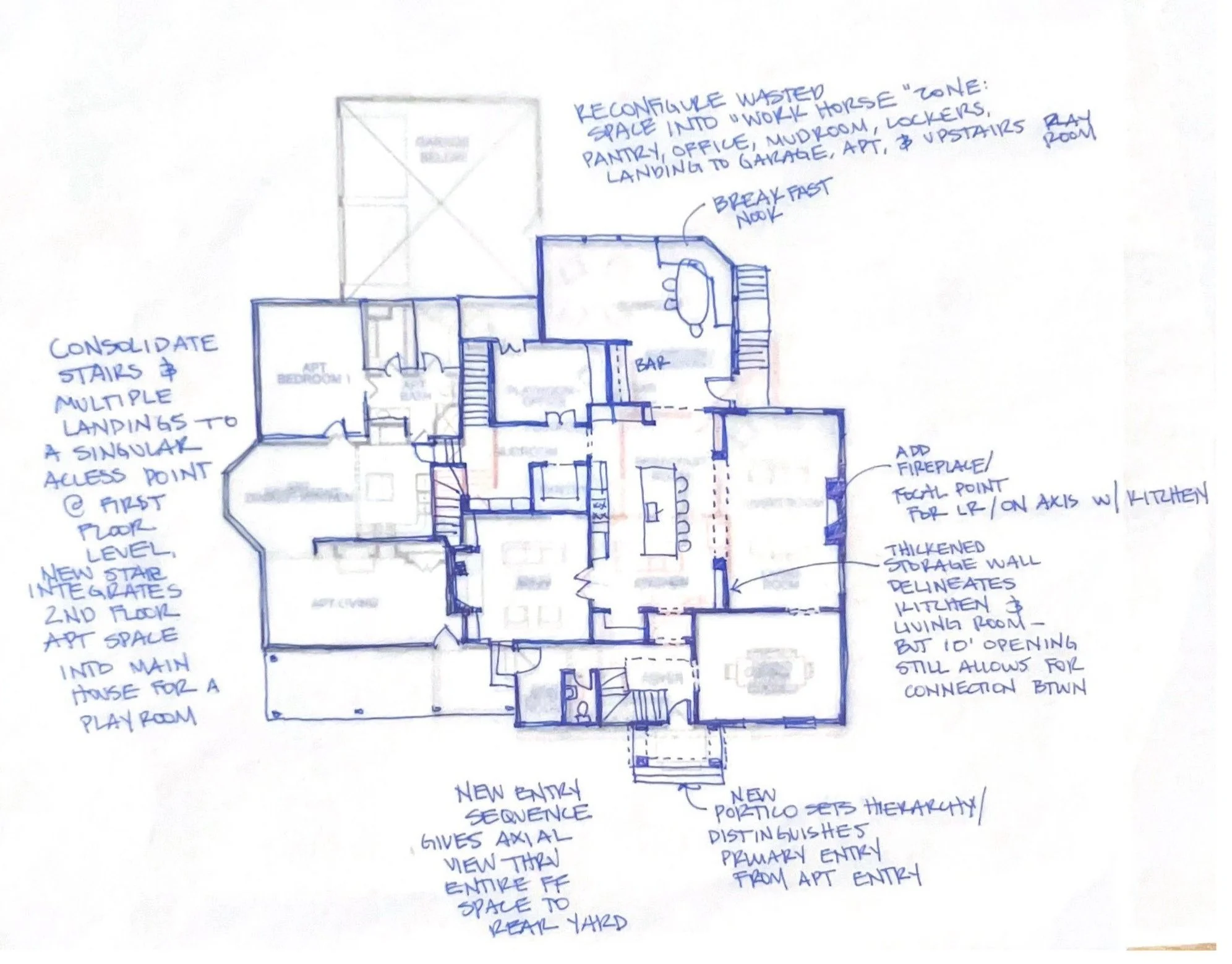
The wider openings between the Living Room, Kitchen, and Sunroom encourage interaction, fostering a casual atmosphere. These openings are defined by thickened “storage walls” containing shelves for cookbooks, brass rails to display the owner’s china collection, and a hidden spice cabinet. Their depth gives a weighted permanence to the spaces, that these elements and subsequent rooms are all original to the house.
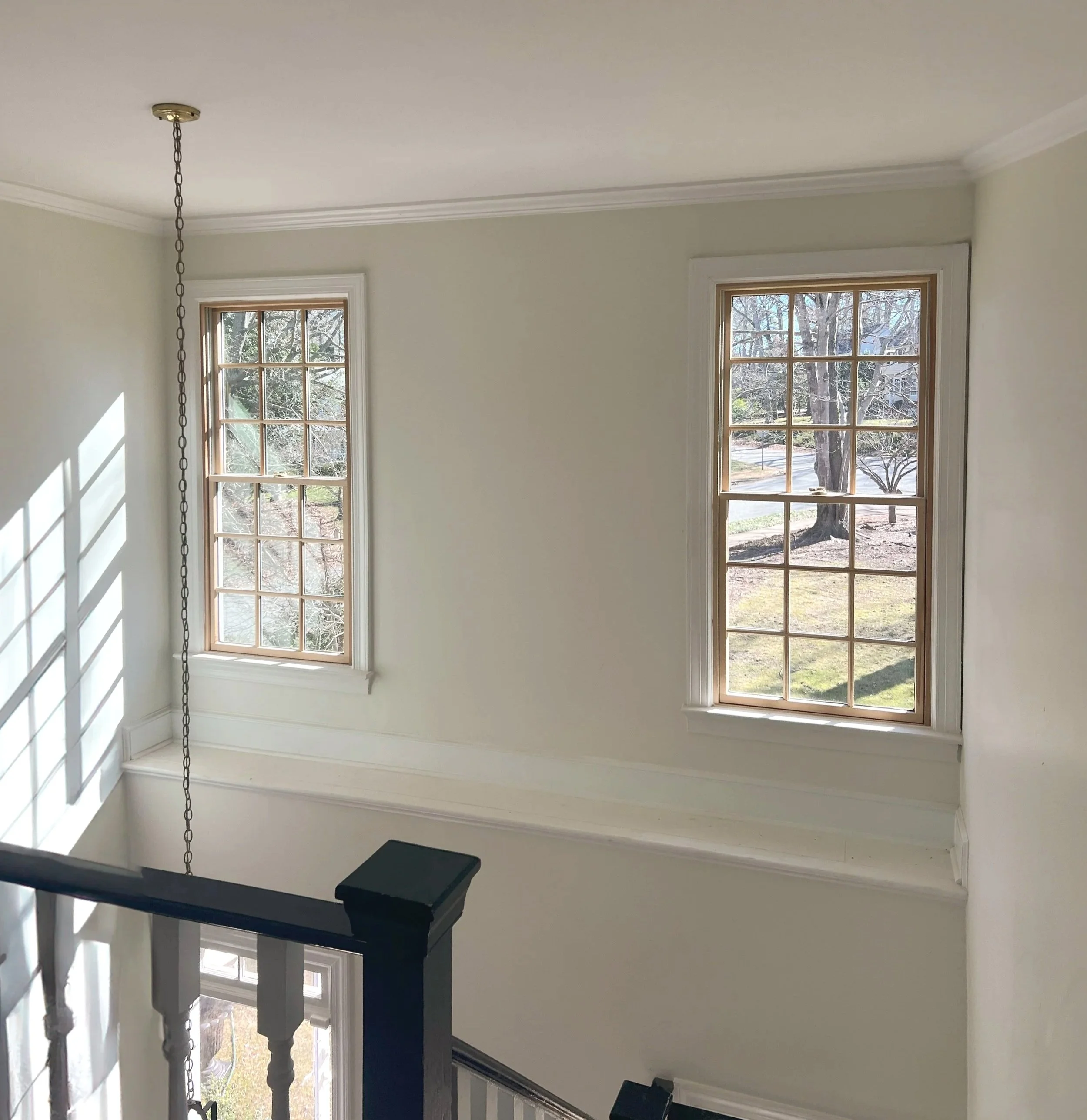
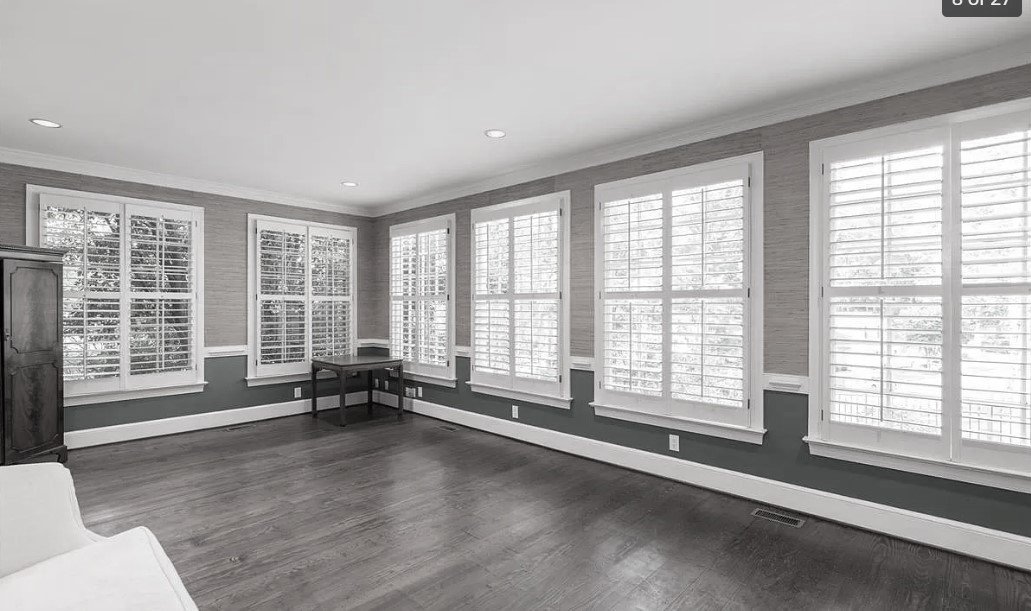
Before
The dreaded “plant shelf” was removed by furring out the foyer wall. This simple move echoes the thick walls found in historic homes. Following Classical principles, flaring the walls around the windows outwards allows more light into the space, turning the outdated shelf into a stunning architectural moment.
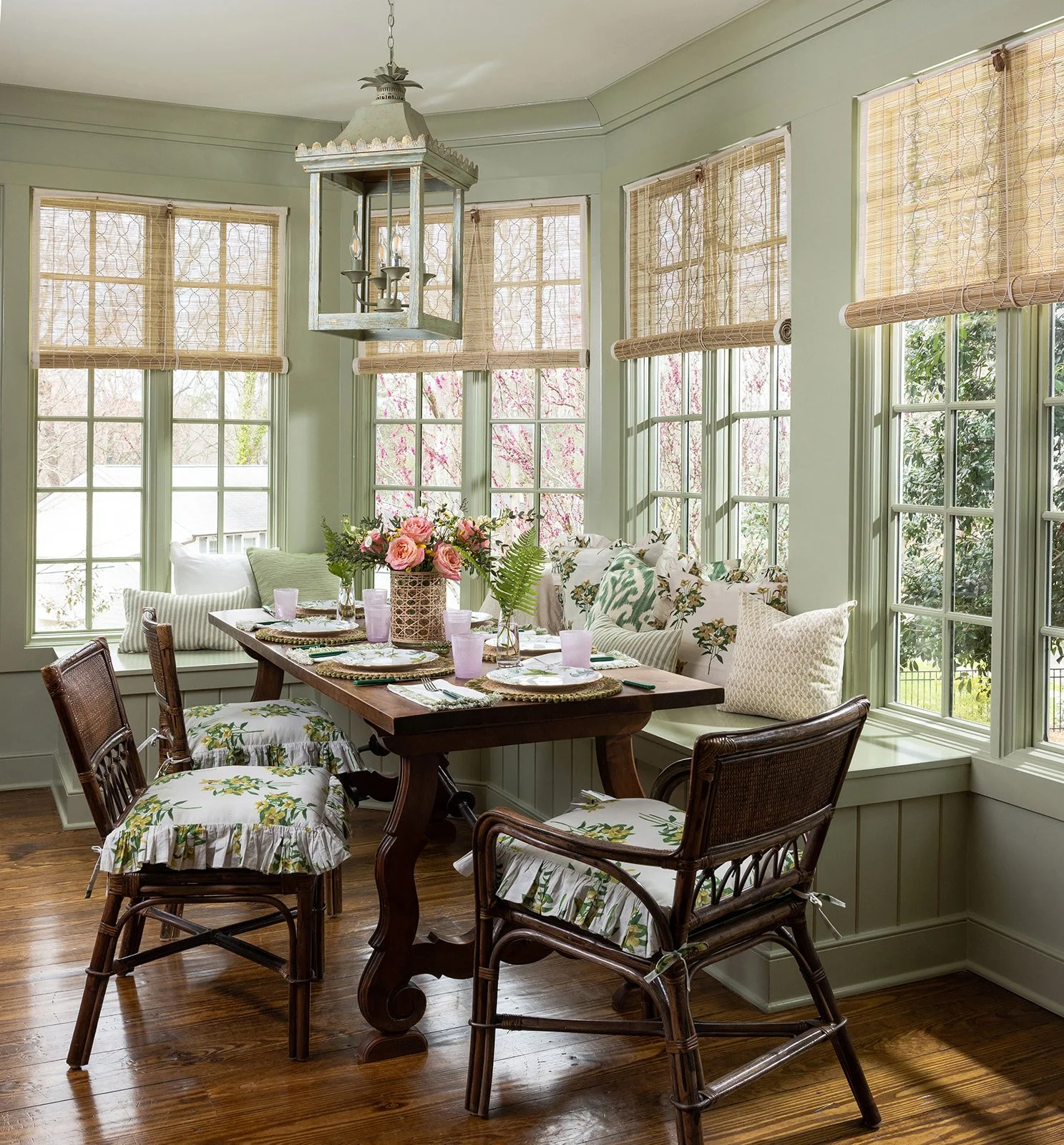
A banquette is added to the Sunroom providing additional seating for informal meals
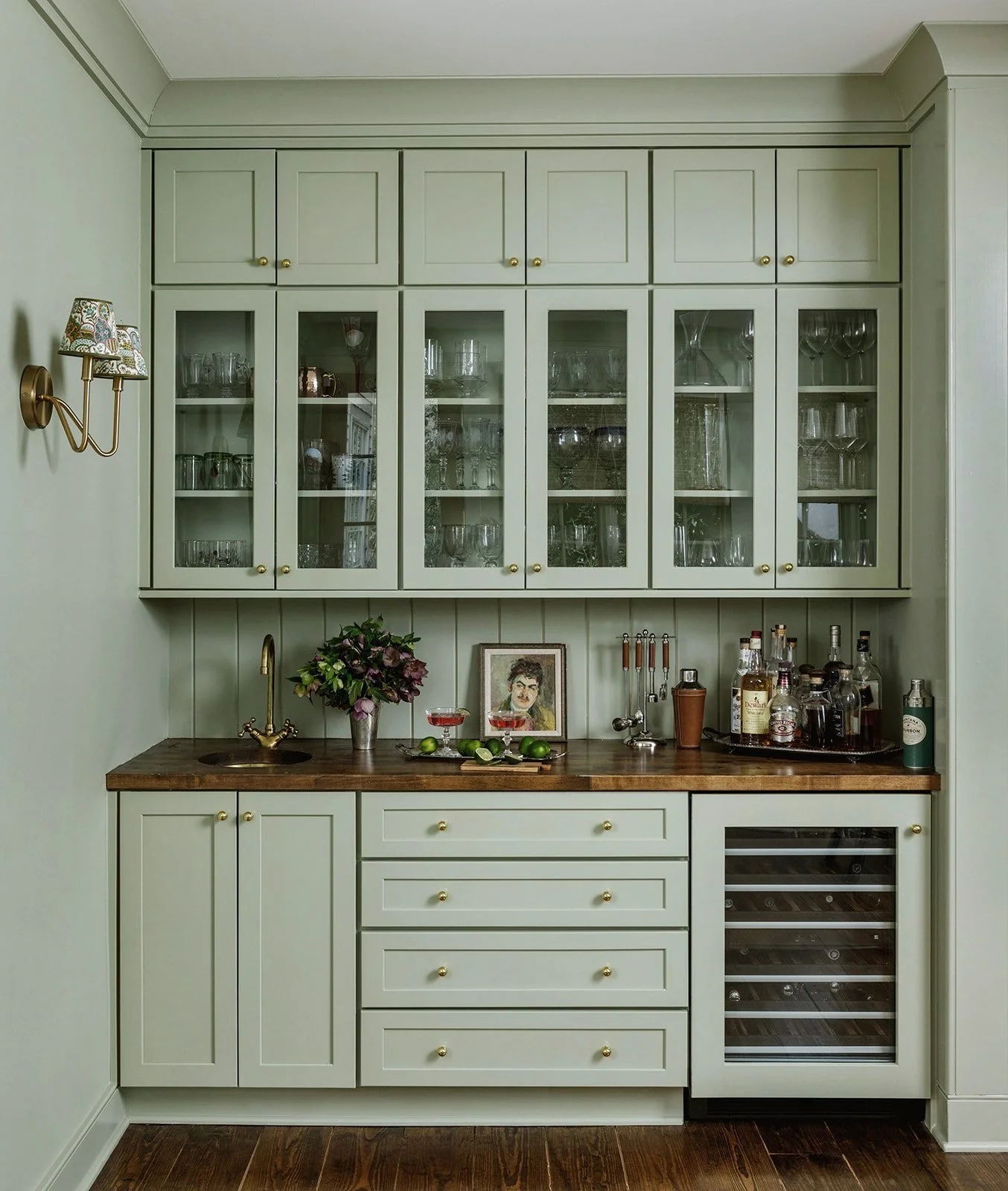
A new wet bar guarantees guests a good time
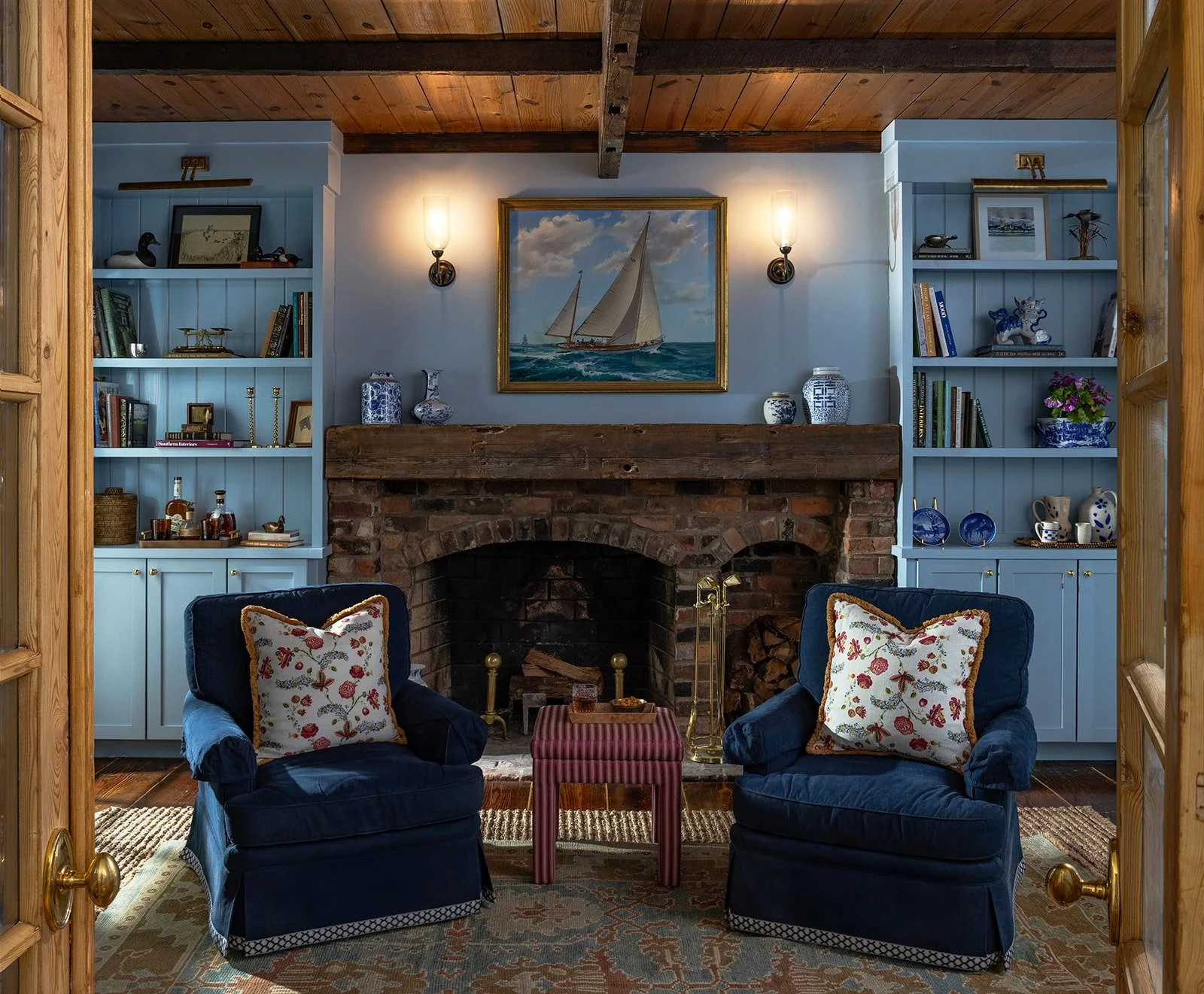
Adjacent to the kitchen is the Snug, a cozy, enclosed room, that provides a contrast to the openness of the living areas, creating a balance between spaces for communal gathering and private retreat.
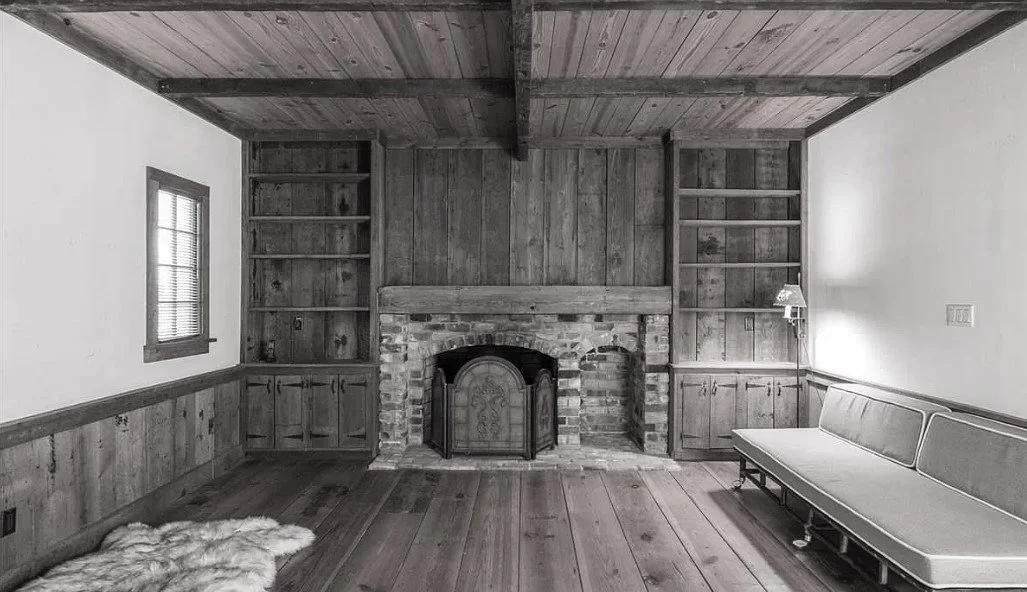
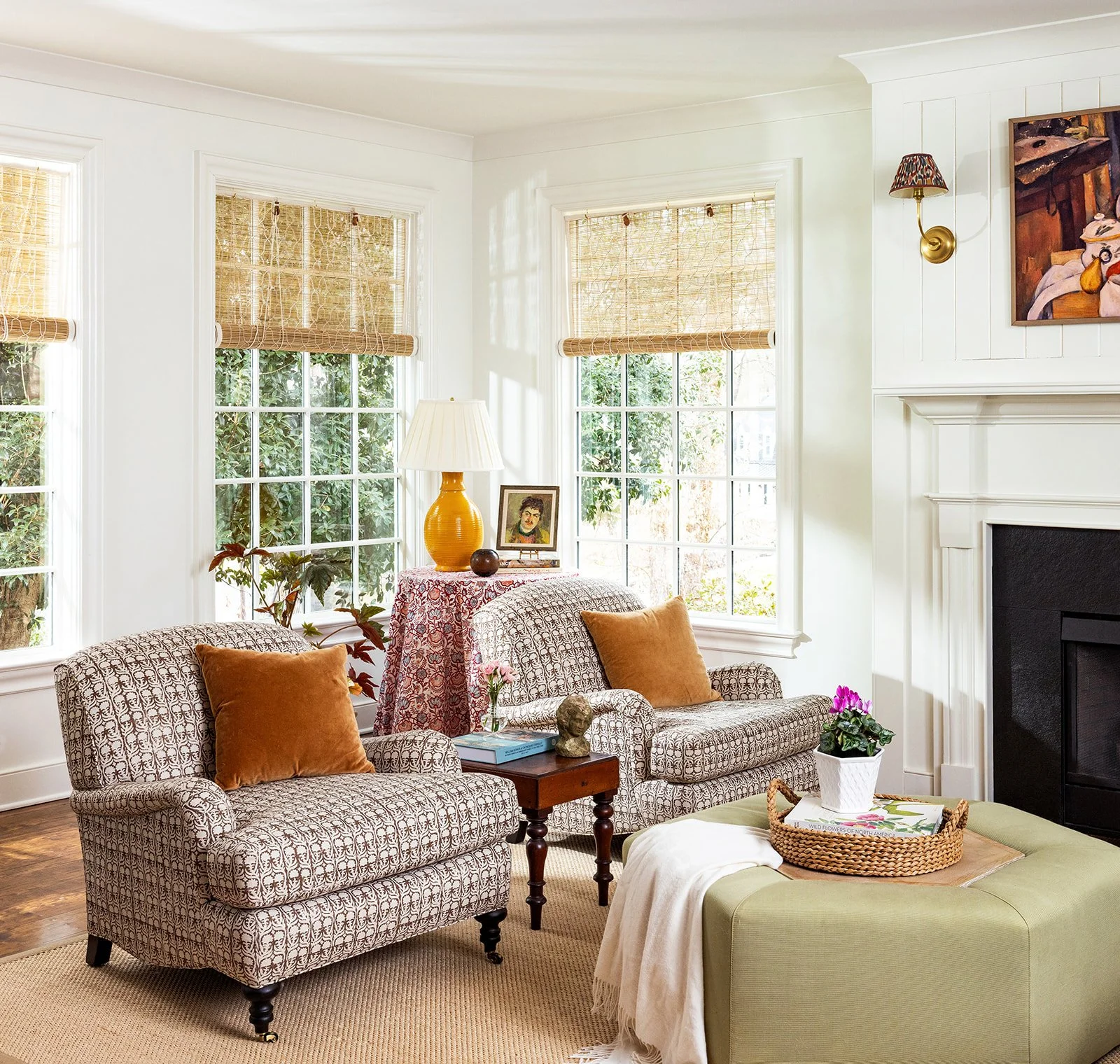
Adding a fireplace and hearth gives a clear focal point and sense of permanence to the room. Researching of historic New England homes informed the proportions and detailing of new millwork, grounding the room in precedent.
Design Process
use arrows to view to next image
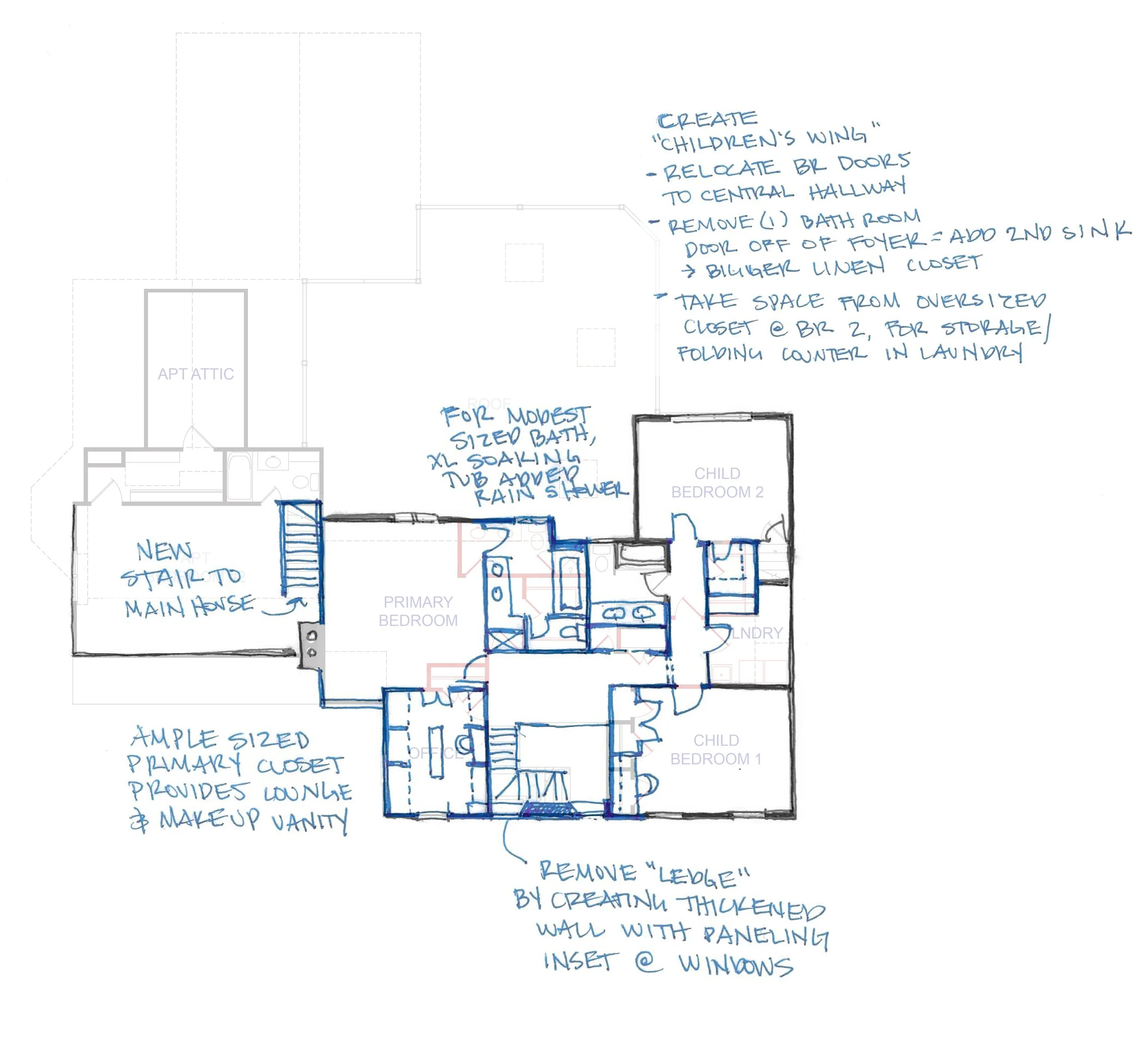
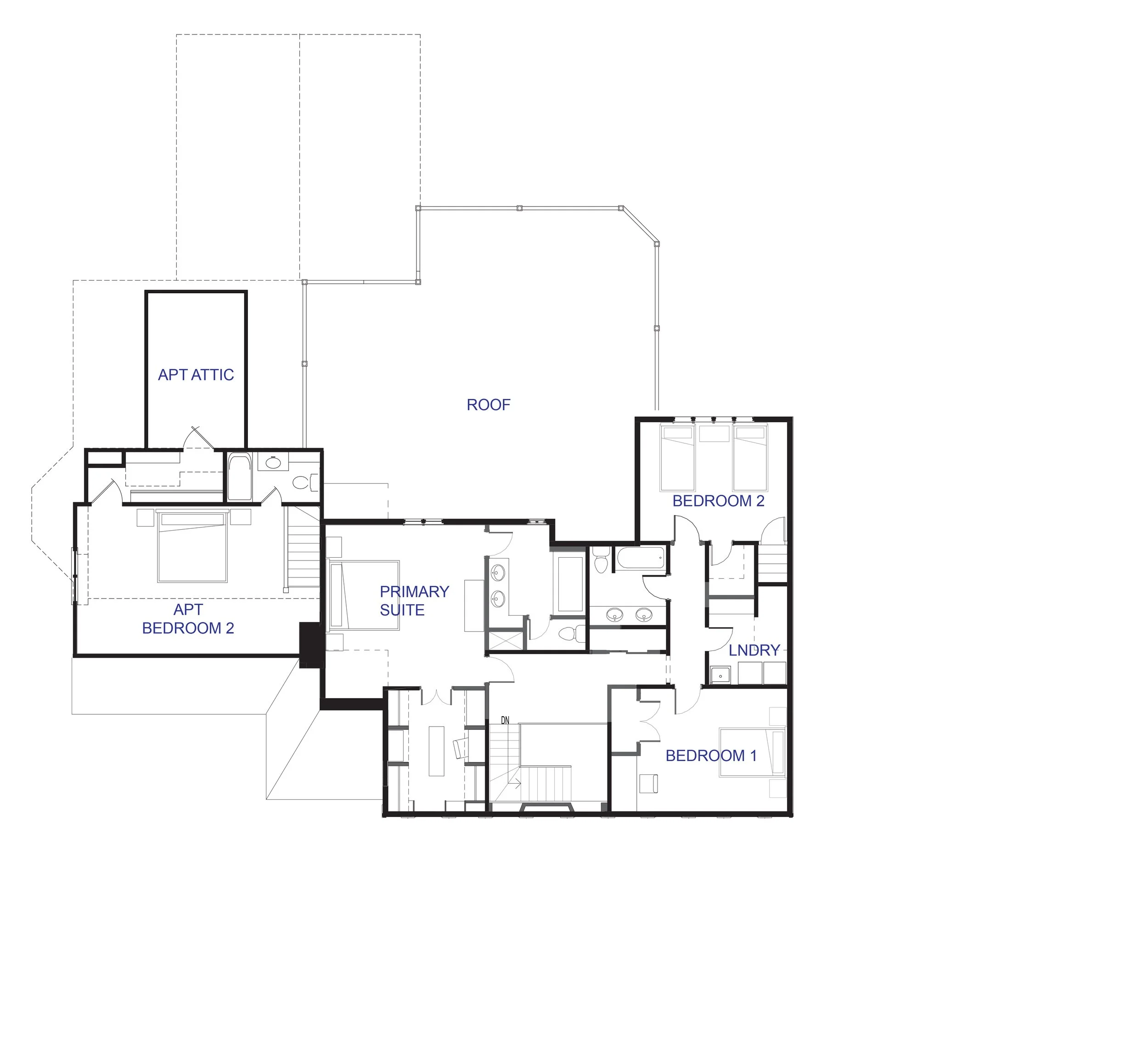
Exterior
The exterior follows a Garrison style with a formal, symmetrical composition. The apartment wing introduces a measured asymmetry, acting as a counterpoint to the main structure. In Phase Two, a screened porch will be added off the living room to balance the right side of the house.
A new front portico establishes clear hierarchy and guides visitors to the primary entrance. Side and apartment entries are grouped beneath a covered colonnade, reinforcing their secondary role and clarifying what was previously a confusing arrival sequence.
Details such as wood shutters with iron hold-backs, roof dormers, and gas lanterns add texture and character. Local materials—including brick pavers and cedar clapboard siding—anchor the design in its regional context.
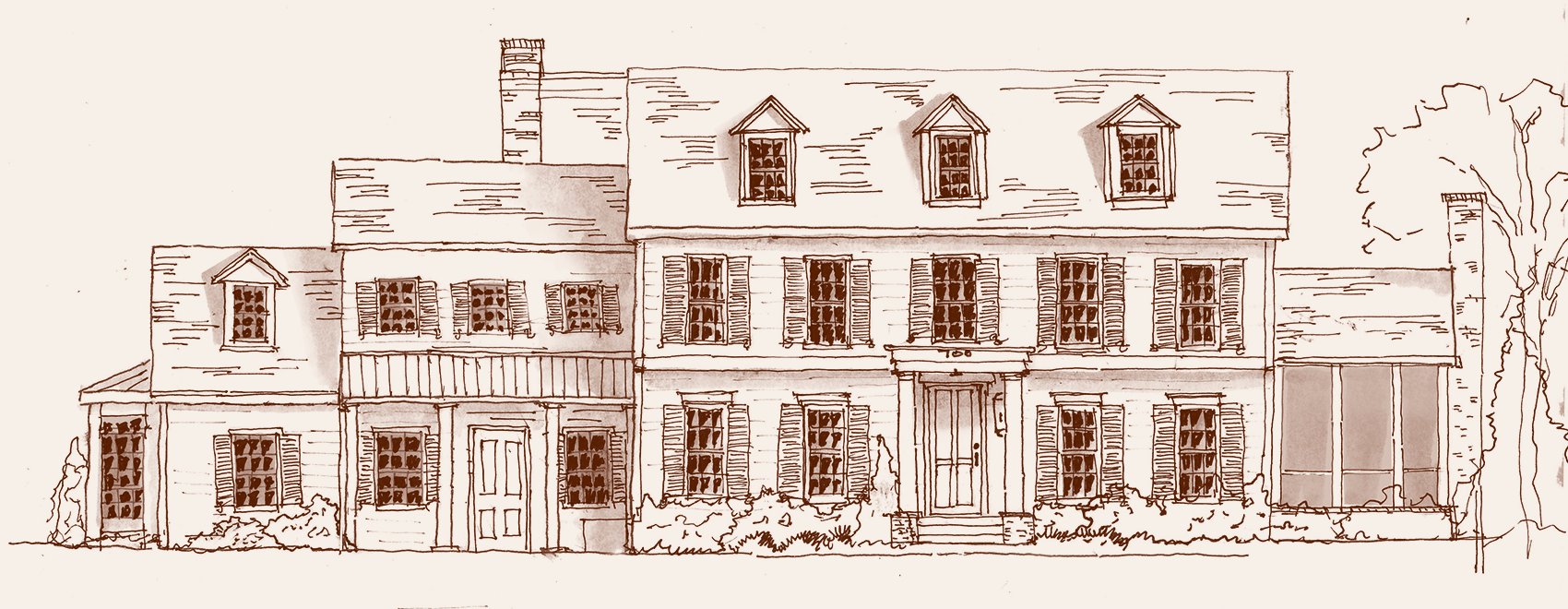
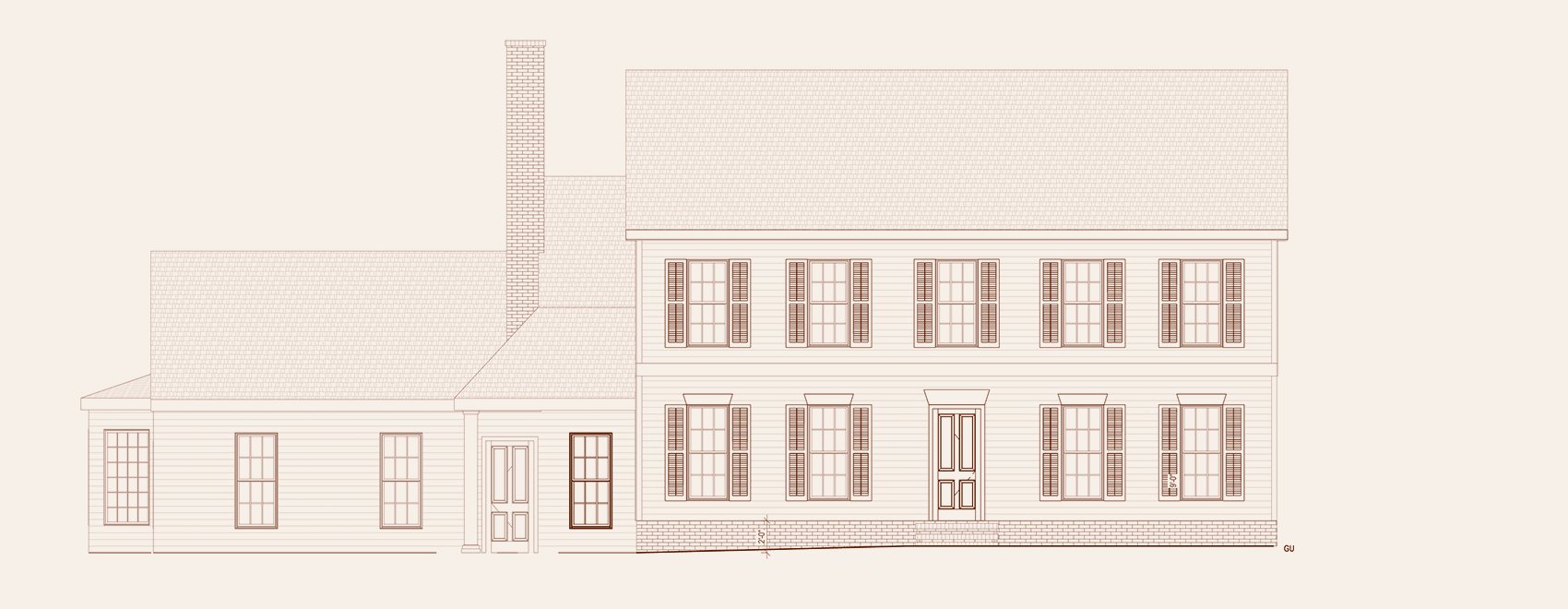
Front Elevation - Phase Two
(hover for before & after)